
Hotel chargebacks: why they happen and how to prevent them
A chargeback is a payment reversal the guest requests from their bank instead of asking you for a refund. For hotels they cluster around no-shows, unclear cancellation terms, unrecognized card statements and genuine fraud. Each one costs the room revenue plus a dispute fee — but most are preventable with clear policies and modern payment tools.
What actually happens when a guest files a chargeback
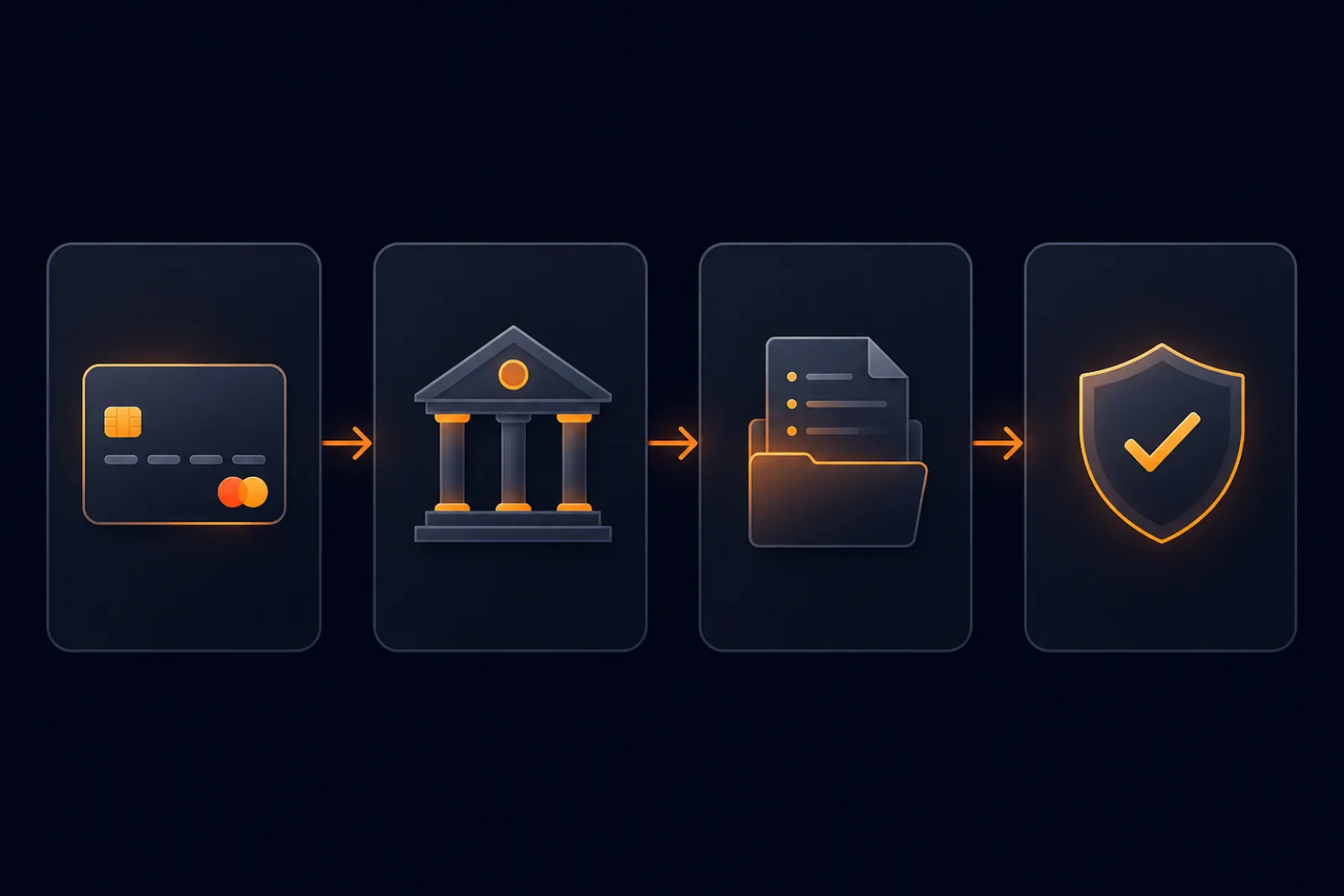
A chargeback is not a refund with extra steps — it is a formal dispute process governed by card network rules (Visa, Mastercard, American Express), and the timeline is longer than most hoteliers expect. Understanding each stage matters because every stage has a deadline, and missing one usually means losing by default.
- The guest disputes the charge with their bank. Depending on the network, cardholders typically have up to 120 days from the transaction (or from the check-out date) to file.
- The funds are pulled immediately. The disputed amount is debited from your account and held while the case is reviewed, and a dispute fee is charged on top.
- You receive the dispute with a reason code. The code ('fraudulent', 'product not received', 'credit not processed'…) tells you what evidence the bank expects.
- You submit evidence — or accept. Response windows are short, usually 7–21 days depending on the network and your payment provider.
- The issuing bank decides. A resolution typically takes 30–90 days. If you win, the funds return; the dispute fee is often kept either way.
The four causes behind most hotel chargebacks
Hotel chargebacks are not random: they concentrate in four patterns, and each one has a different fix. Treating them all as 'fraud' is the most common mistake — it loses winnable disputes and leaves the real leaks open.
1. Policy disputes
The guest didn't understand (or ignored) the cancellation or no-show terms and disputes the penalty charge. This is the most preventable category: the fix is showing terms clearly before payment and keeping proof of acceptance.
2. Unrecognized statement descriptors
The card statement shows a legal entity name — a holding company, a management group — that the guest doesn't connect to your hotel. Weeks after the stay, they genuinely don't recognize the charge and dispute it as fraud. This category is called 'friendly fraud' and it is estimated to account for a large share of all hospitality disputes.
3. Service disputes
The stay didn't match expectations — room category, amenities, cleanliness — and instead of complaining at the front desk, the guest went straight to the bank after leaving. Fast, documented guest communication is the antidote.
4. True fraud
Stolen card numbers, usually on high-value, last-minute bookings where the fraudster never intends to show up — or shows up, stays, and lets the real cardholder dispute later. This is the category where payment technology (fraud screening, 3D Secure, wallets) does the heavy lifting.
What a chargeback really costs a hotel
The visible loss is the room revenue, but the true cost is larger. Industry analyses consistently place the total cost of a dispute at two to three times the transaction amount once fees, operations and inventory are counted.
| Cost component | What it means |
|---|---|
| Lost revenue | The disputed amount is debited immediately, even before the case is decided. |
| Dispute fee | Typically $15–25 per dispute, usually kept by the processor even if you win. |
| Lost inventory | For no-show disputes, the room went unsold — the opportunity cost is unrecoverable. |
| Staff time | Gathering folios, correspondence and check-in records for each response. |
| Monitoring programs | Card networks track your dispute ratio; sustained high ratios (around 1% of transactions) can trigger remediation programs with extra fees, and in extreme cases the loss of card processing. |
That last row is why prevention matters more than winning disputes: a hotel that wins every dispute but keeps a high dispute ratio is still at risk.
The prevention playbook: policies, descriptors and evidence
Most hotel chargebacks are preventable with operational discipline — none of this requires new technology, only consistency.
- Show cancellation and no-show terms at checkout, not buried in a link. Acceptance at booking is your single best piece of dispute evidence.
- Repeat the terms in the confirmation email — it proves the guest had them in writing before arrival.
- Set a recognizable statement descriptor: your hotel's public name, not the holding company. This alone eliminates a large share of 'unrecognized charge' disputes.
- Keep check-in records: signed registration cards or digital check-in logs prove the guest was physically there.
- Notify before charging penalties. An email saying 'per the policy you accepted, tonight's no-show fee will be charged' converts surprise disputes into understood charges.
- Answer refund requests within hours, not days. A guest who gets a reply rarely escalates to the bank — most 'service' chargebacks start as an unanswered email.
- Watch your dispute ratio monthly, not just individual cases, so a pattern (one OTA, one rate plan, one segment) surfaces early.
What modern payment tools add
Operational discipline handles policy and service disputes; payment technology handles fraud and authentication. Payment platforms like Stripe — GuruHotel's payment partner since 2019 — attack the problem in four layers.
- Machine-learning fraud screening. Every transaction is risk-scored in real time against patterns learned from millions of businesses. High-risk payments — the stolen-card, last-minute booking profile — are blocked before they become disputes.
- 3D Secure authentication with liability shift. When a payment is authenticated with 3D Secure (the bank's verification step), liability for fraud disputes generally shifts to the card issuer. An authenticated fraudulent charge is usually not your loss anymore.
- Wallets: Apple Pay and Google Pay. Wallet payments are biometrically confirmed by the cardholder on their own device, which nearly eliminates 'I don't recognize this charge' claims — and they convert better on mobile, where most direct bookings happen.
- Structured dispute response. When a dispute does arrive, evidence submission is built into the dashboard: upload the accepted policy, the confirmation email and the check-in record, and the case file goes to the bank in the format it expects.
How to fight a dispute — and when to accept it
When a dispute arrives, match your evidence to the reason code instead of sending everything. Banks review thousands of cases; a focused, relevant file wins more often than a thick one.
Evidence that consistently wins hotel disputes:
- The cancellation/no-show policy as shown at booking, with the acceptance timestamp.
- The booking confirmation email with the terms repeated.
- Check-in proof: signed registration card, digital check-in log, key-card issuance.
- Folio and receipts for incidental charges.
- Guest correspondence — especially any message where the guest acknowledges the stay or the terms.
When to accept instead: if the charge was genuinely wrong (double charge, wrong amount), refund proactively before it becomes a dispute; and on very small amounts, weigh the dispute fee plus staff time against the recovery. Accepting an occasional unwinnable case is cheaper than fighting everything on principle.
Direct bookings give you more control
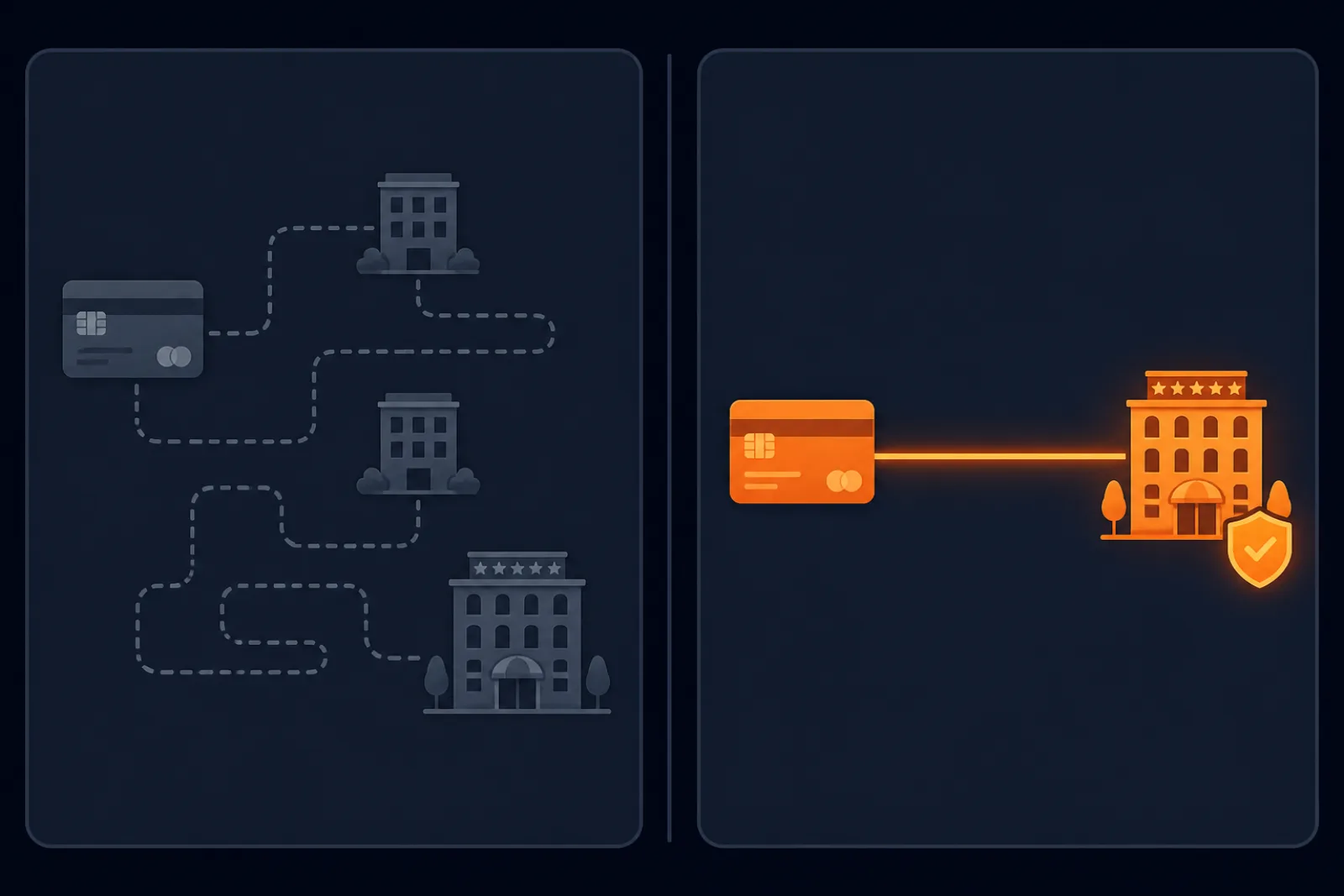
With OTA bookings, payment often runs through virtual cards and the OTA's rules; your evidence trail is thinner and the descriptor on the statement may not even be yours. On direct bookings you control the checkout end to end: your policies shown and accepted, your statement descriptor, your fraud screening, your guest communication. That's why hotels with strong direct channels consistently report lower chargeback rates than OTA-heavy peers — every prevention lever in this guide is fully in your hands only on your own website.
How GuruHotel helps
GuruHotel turns a hotel's official website into a direct booking channel: an AI-built site, a conversion-optimized booking engine, real-time inventory synced with your PMS (Cloudbeds direct, 345+ more via Channex) and Stripe-powered payments — commission-free on every direct reservation.
FAQ
Can a hotel win a chargeback dispute?
Yes — hotels win disputes regularly when they submit clear evidence: the cancellation policy accepted at booking, the confirmation email, check-in records and guest correspondence. Disputes over authenticated (3D Secure) payments often never reach you at all, because liability shifted to the card issuer.
How long does a hotel chargeback take to resolve?
From dispute to decision usually takes 30–90 days depending on the card network. Your own response window is much shorter — typically 7–21 days to submit evidence — so treat every new dispute as urgent even though the final ruling takes months.
Can a hotel charge a no-show fee without getting a chargeback?
Yes, if the process is airtight: the no-show fee was displayed and accepted at booking, repeated in the confirmation email, and the guest was notified before the charge. Charges that surprise the guest are the ones that turn into disputes — charges the guest saw coming rarely do.
What chargeback rate is considered high for a hotel?
Card networks generally start flagging merchants when disputes approach around 1% of transactions (thresholds vary by network and program). Healthy hotels operate far below that — if your ratio is trending toward half a percent, treat it as an early warning and audit where the disputes are coming from.
How does GuruHotel relate to this?
GuruHotel provides an AI-built hotel website, a direct booking engine, real-time inventory and Stripe-powered payments, helping independent hotels grow commission-free direct bookings alongside their OTA channels.