
What is a GDS? Global distribution systems in hotel distribution, explained
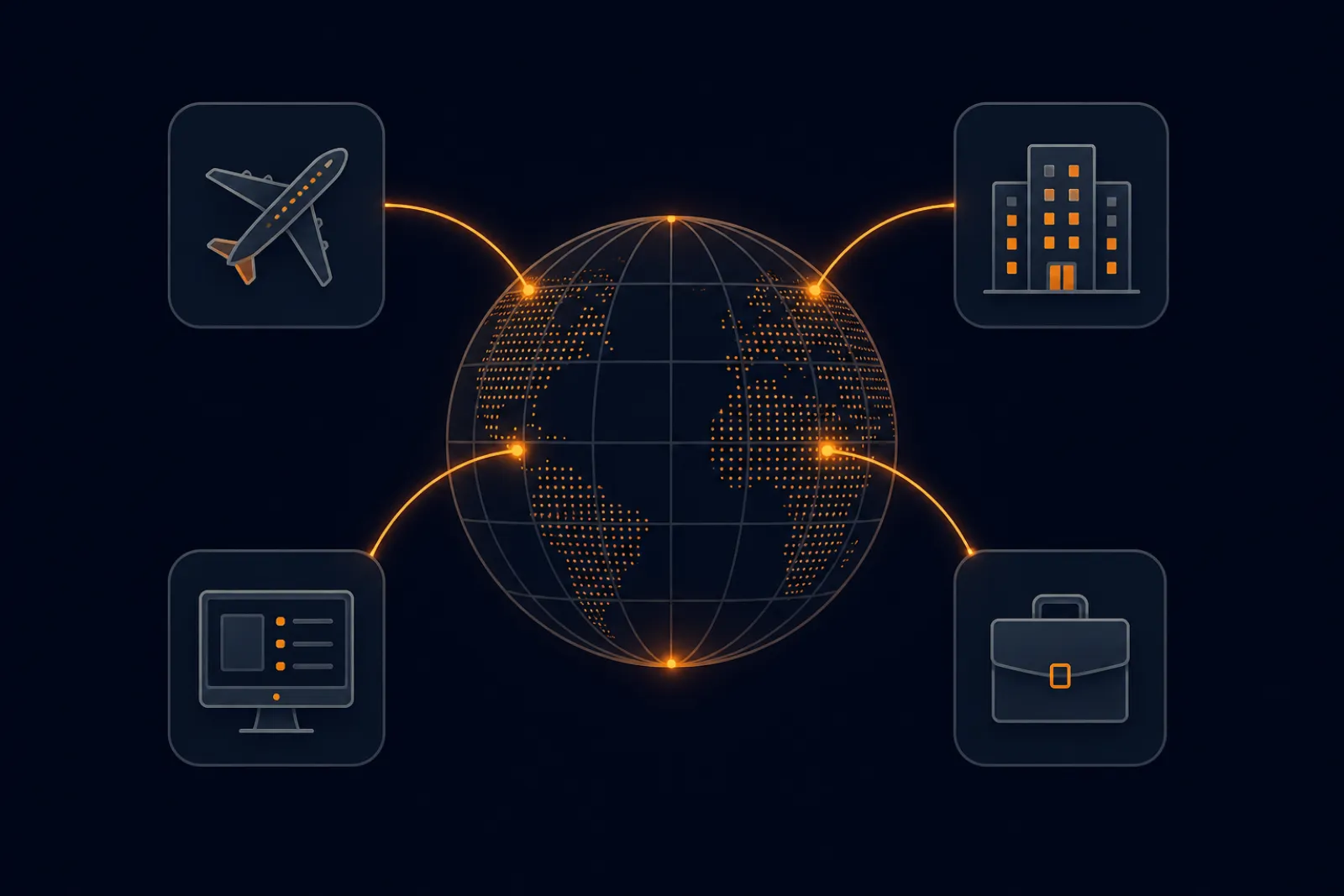
A GDS (global distribution system) is a network that connects hotels, airlines and car rentals to travel agents and corporate booking tools. The big three are Amadeus, Sabre and Travelport. For hotels, a GDS mainly brings corporate and travel-agent business — a different channel from OTAs and your own website.
How a GDS works
Travel agents and corporate travel platforms search the GDS for inventory. Hotels publish rates and availability into the system — usually through a CRS or channel-management connection — and pay per-booking fees plus, often, a commission to the booking agent. Bookings flow back into the hotel's systems like any other channel.
GDS vs OTA vs direct: three different channels
The GDS reaches professional intermediaries (agents, corporate programs). OTAs like Booking.com and Expedia reach consumers directly. Your own website is the direct channel — the only one with no commission and full ownership of the guest relationship. A healthy strategy prices and allocates inventory deliberately across all three.
| Channel | Who books there | Typical cost | Guest data |
|---|---|---|---|
| GDS | Travel agents, corporate programs | Per-booking fees + agent commission | Limited |
| OTA | Consumers on Booking.com, Expedia, Agoda | 15–25% commission | Masked emails |
| Direct website | Guests who search your hotel by name | 0% commission | Fully yours |
The big three networks: Amadeus (strongest in Europe and with airlines), Sabre (strong North American agency base) and Travelport (operating Galileo, Apollo and Worldspan). Hotels rarely connect to them one by one — a CRS, channel manager or representation company handles the plumbing.
Does an independent hotel need a GDS?
It depends on your demand mix. Properties near business districts, airports or convention centers can win meaningful corporate volume from the GDS. Leisure-driven independents often get better returns from OTA visibility plus a strong direct channel, adding GDS later through a representation company if corporate demand appears.
Where the direct channel fits
Whatever your GDS/OTA mix, every channel you add makes the commission-free one more valuable. Travelers who discover you anywhere often verify on your official website; if it loads fast, shows live rates and books in a few taps, you capture that demand at zero acquisition cost.
How GuruHotel helps
GuruHotel turns a hotel's official website into a direct booking channel: an AI-built site, a conversion-optimized booking engine, real-time inventory synced with your PMS (Cloudbeds direct, 345+ more via Channex) and Stripe-powered payments — commission-free on every direct reservation.
FAQ
What are the main GDS providers?
Amadeus, Sabre and Travelport (which operates Galileo, Apollo and Worldspan). Hotels usually connect through a CRS, a channel manager or a representation company rather than integrating with each GDS directly.
How much does GDS distribution cost a hotel?
Expect three layers: a per-booking transaction fee (commonly in the $4–$12 range), a commission to the booking agent (often around 10%), and the monthly cost of the CRS or representation service that connects you. That's why GDS makes sense for corporate-heavy properties and rarely for small leisure hotels.
Is the GDS the same as a channel manager?
No. The GDS is a sales network (where agents book); a channel manager is your synchronization tool (it pushes rates and availability to OTAs, the GDS and your booking engine, and pulls reservations back). A channel manager can be the bridge that puts your inventory into a GDS.
How does GuruHotel relate to this?
GuruHotel provides an AI-built hotel website, a direct booking engine, real-time inventory and Stripe-powered payments, helping independent hotels grow commission-free direct bookings alongside their OTA channels.