
Hotel upselling: techniques that raise revenue without raising rates
Hotel upselling is offering guests a better version of what they already bought — a higher room category, a view, early check-in — while cross-selling adds extras like breakfast, parking or spa. Done at the right moments (booking, pre-arrival, front desk), it lifts revenue per stay with near-zero acquisition cost.
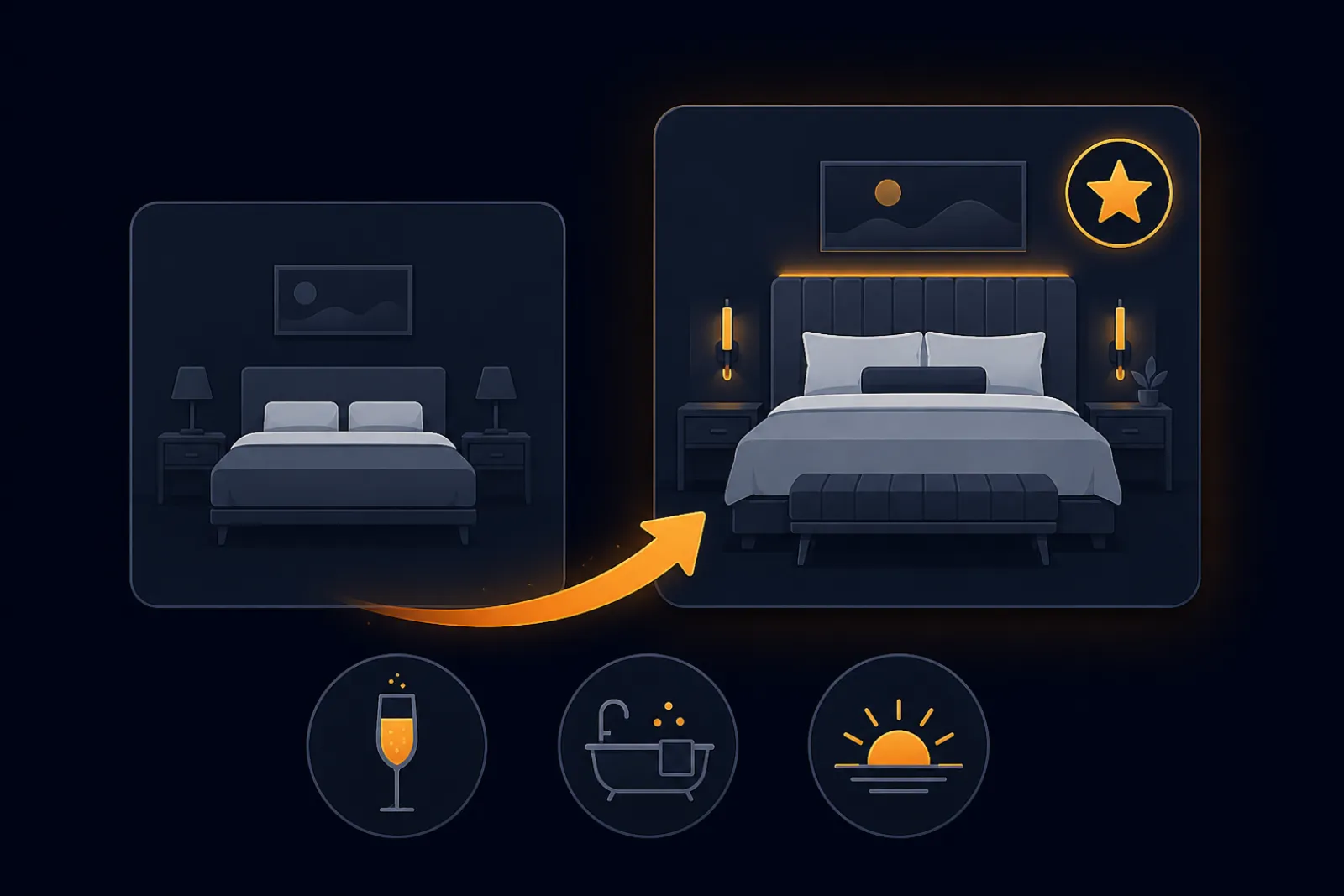
Upselling vs cross-selling
Upsell: same product, better tier — suite instead of standard, high floor, balcony. Cross-sell: complementary products — airport transfer, dinner package, late checkout. Both work best framed as value ('for $25 more, a room with terrace') rather than as add-on fees, and both need clean inventory data to avoid promising what isn't available.
The three moments that convert
At booking: show room categories side by side with real photos — the upgrade sells itself. Pre-arrival: an email or message 2–3 days out offering upgrades and extras at a set price captures planners. At the desk: a trained agent offering today's available upgrade converts impulse. Each moment needs its own offer and price logic.
High-acceptance offers to start with:
- Room upgrade at check-in — priced at roughly half the normal rate difference; monetizes rooms that would sit empty.
- Late checkout / early check-in — near-zero cost, high perceived value; sell as a fixed fee or a 'flexible stay' bundle.
- Breakfast added after booking — cheaper than the walk-in price, charged to the folio.
- Airport transfer — high-margin for the hotel, genuine convenience for international arrivals.
- Celebration kits — flowers, cake, sparkling wine for birthdays and anniversaries; guests rarely price-compare these.
Pricing the upsell
Anchor the upgrade to the rate difference, then discount it: if the suite normally costs $60 more, offering it at $35 at check-in converts far better and still monetizes a room that would sit empty. Track acceptance rates by offer and moment — the data quickly shows which upgrades guests actually value.
Why the direct channel upsells better
OTA guests belong to the OTA until they arrive — you often can't message them properly or attach extras to their booking. Direct guests booked on your website leave email, phone and preferences, so pre-arrival offers actually reach them. More direct bookings don't just save commission; they unlock the whole upsell window.
How GuruHotel helps
GuruHotel turns a hotel's official website into a direct booking channel: an AI-built site, a conversion-optimized booking engine, real-time inventory synced with your PMS (Cloudbeds direct, 345+ more via Channex) and Stripe-powered payments — commission-free on every direct reservation.
FAQ
What's a realistic revenue lift from upselling?
Hotels running structured programs commonly add a low single-digit percentage of room revenue from upsells and extras. The bigger driver is consistency: an offer at every booking, every pre-arrival message and every check-in.
What are the best examples of hotel upselling?
The classics with the highest acceptance: a discounted room upgrade offered at check-in, guaranteed late checkout sold pre-arrival, breakfast added after booking, airport transfers for international guests, and celebration packages. Each works because it improves a stay the guest already committed to.
Should upsells be offered to OTA guests too?
Yes, but your reach is limited: OTA relay emails expire and extras often can't attach to the OTA booking. The desk becomes your only reliable moment. That's a structural reason to grow direct bookings — with a guest's real email and your own checkout, the entire pre-arrival upsell window opens up.
How does GuruHotel relate to this?
GuruHotel provides an AI-built hotel website, a direct booking engine, real-time inventory and Stripe-powered payments, helping independent hotels grow commission-free direct bookings alongside their OTA channels.